Excerpt from Nursing and Becoming:
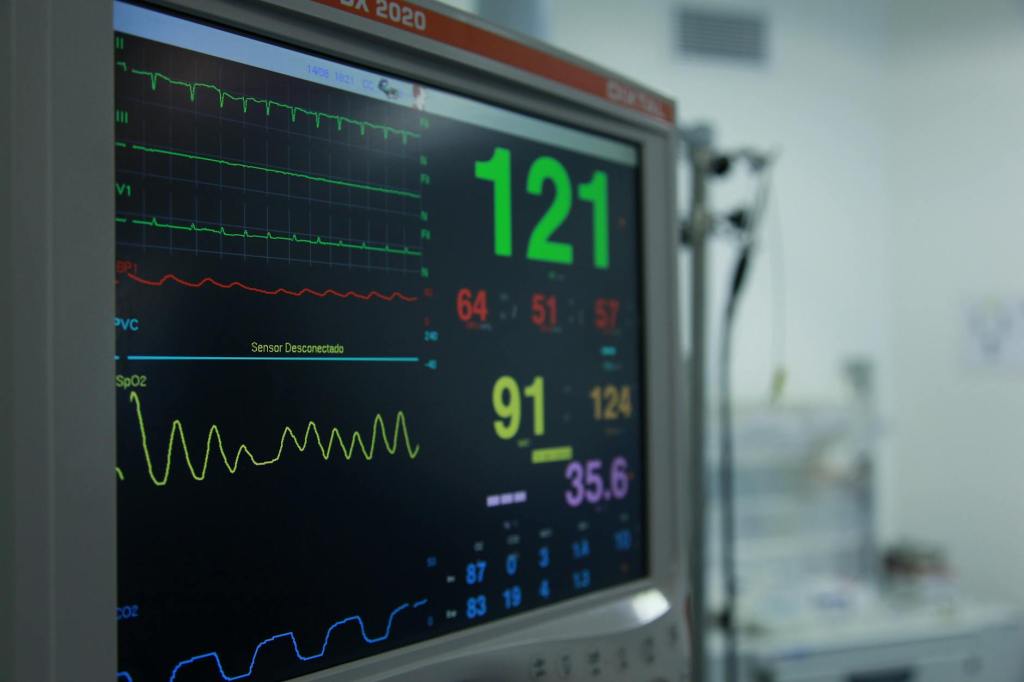
I was doing wound care in another patient’s room two doors down when it happened. I overheard some commotion outside about MTP (massive transfusion protocol), the rapid infusion of blood products given to a patient in acute hemorrhagic shock. Someone ran to get the rapid blood infuser, someone else ran to get the cooler of blood from the hospital blood bank. I was deep into a dressing change, nervous, and thinking that I would only get in the way since I’m new here and I don’t actually know where most of the equipment is located. I pulled up his real-time vital signs from my patient’s room monitor. I watched as his cardiac rhythm flat-lined. I watched his oxygen saturation suddenly drop from 98% to 36%. Then I knew they started CPR.
I wasn’t there. But I was there. I didn’t see the code with my own eyes. I saw it as a surreal second-order observer. Not exactly a second-order observer, perhaps more accurately a 1.5-order observer. I did not see the people in action, I did not see the patient, but I watched his vitals remotely in real-time, and I heard the voices periodically from behind my curtain as I finished my wound care in the other room. Below the gap in the curtain, I could see the legs of the crowd of people standing outside his room, watching the code. They were the first-person observers.
In a code, you cannot have too many people in the room or it quickly becomes chaos. There is already limited space with the ventilator, and the hemodialysis machine, and the code cart, and the defibrillator, so only very essential people should stay: the doctor leading the code, the person doing chest compressions, someone administering meds, someone recording the events, someone maintaining the airway, the doctor putting in the emergency chest tube. To my deepest shame, I was afraid and unsure of how I could be helpful so I did nothing. I did nothing at all to help this dying young man…
It is true when they say: It’s the things you DIDN’T do that you regret the most…
Afterwards, a tearful nurse mentioned that right before he coded, he screamed. Of course, a person who is vented cannot audibly scream with a breathing tube inside their throat, but you can use your imagination. It is not the sound alone that makes a scream so horrific, for even a deaf person can see the abject terror of a silently screaming person who knows that he is about to die. They couldn’t do proper chest compressions on him because he had no skin and he was bleeding everywhere, so their hands kept slipping off his chest. I did not see it with my own eyes, but I can see it with my imagination. If I had seen it, if I had felt his body, warm and slippery beneath my palms, his blood splattering everywhere—Is that sweat dripping down my face or is it the patient’s blood?…
I’ve said it before: I don’t think a highly sensitive person should be a nurse. The senses are overloaded. The sights, the sounds, the smells, the feelings, both physical and emotional. Oh how the heart breaks.
They called the code after 45 minutes. Forty-five minutes is a long time to do CPR on a dead person. CPR is physically taxing; the average person can only maintain good chest compressions for about two minutes before needing a break, and then another person must take over. Almost everyone in the vicinity, perhaps even the janitor, had taken their turn at compressions. Everyone, that is, except for me.
Finally, when I heard someone say, “Get in line to do compressions!” I rushed out of my patient’s room, put on my gown and prepared to be next but they pronounced him dead before my turn arrived. The emergency chest tube didn’t help. The blood transfusions didn’t help. The meds didn’t help. The CPR didn’t help. There was nothing more that could be done. It was all too late.
Shame and regret.
I heard he was an engineer. I heard he was a brilliant, kind, young man who would give the shirt off his back to anyone. He was Asian and after seeing his parents and his photos on the wall, I imagine he was very much like people we know, people we are friends with—people just like you and me.
My heart is heavy. Death leaves open the opportunity for so many emotions: the celebration of a long, meaningful life; the sorrow of a life lost too soon; and, possibly, shame and regret.
Did you enjoy this? Purchase the book now:
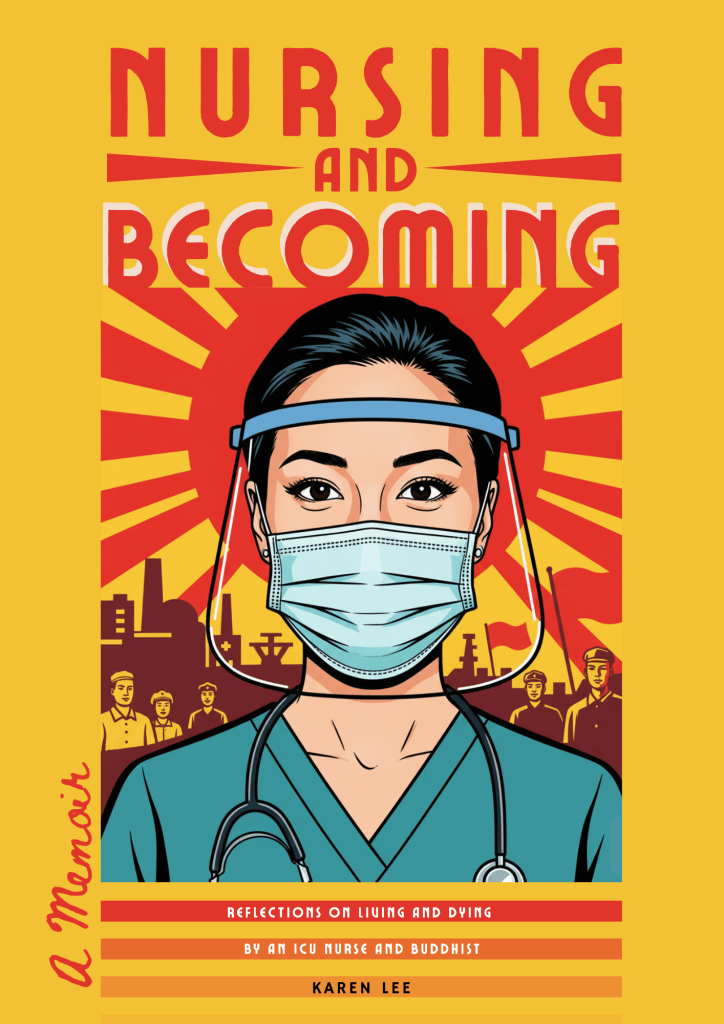
 on nursing and Becoming: A Memoir
Leave a comment